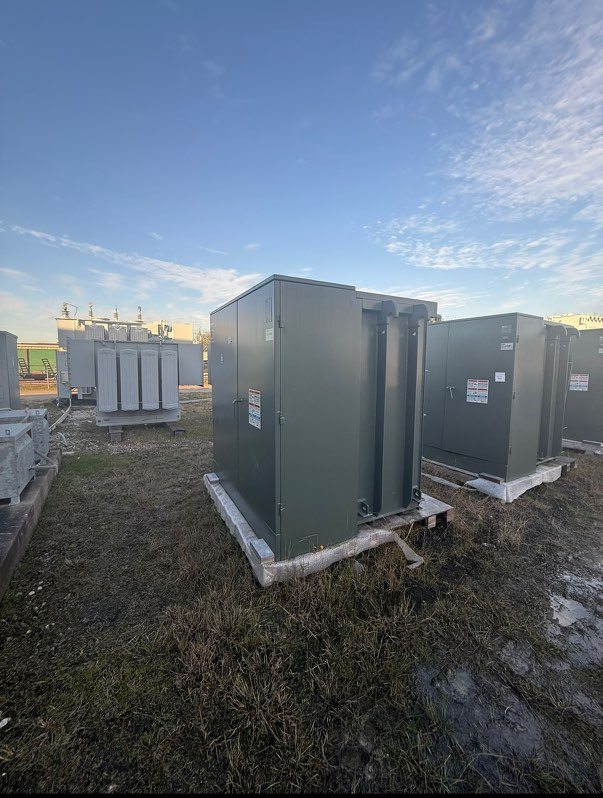
Selling equipment during bitcoin mining decommissioning
Submit transformers and other surplus mining-site power equipment for purchase review when downsizing or closing a mining operation; separate electrical assets from servers and cooling hardware in the inventory.
Planning a sale in Provo
For bitcoin mining decommissioning in Provo, identify the equipment owner and the units available for sale, then share the nameplate information and the anticipated collection window. We review the equipment as a buyer; the seller and qualified site personnel remain responsible for site access and safe preparation.
Site context: In the Provo area of Utah Valley, equipment could be offered from a campus-style property where loading routes and pedestrian areas need coordination.
Pickup consideration: Ask the property contact for a time when the service entrance and walkways can be kept clear of pedestrians.
Helpful details to share: Provide a photo showing the equipment's exterior dimensions or a written length, width, and height.
Separate electrical assets from the rest of the mining inventory
For a Bitcoin mining decommissioning, list transformers and other surplus power equipment separately from servers, miners, containers, and cooling systems. A clear schedule helps the buyer review the electrical assets without confusing them with equipment that is not part of the offer. For each item, record its owner, quantity, make, ratings, and known condition. Include operating hours or maintenance history if available, and note missing parts, corrosion, or visible oil leaks. The review can focus on the assets you are offering rather than assuming every item on site is included.
Give enough technical detail to identify each item
Photograph accessible nameplates and share the identifying information shown, such as make, ratings, serial number, or asset ID. Do not open energized equipment or enter locked compartments to obtain details. Provide existing fluid-analysis or PCB records if they are available; a quote can consider those records without requiring you to test the equipment. Also provide a photo showing the equipment's exterior dimensions, or write down its length, width, and height. Accurate identification and dimensions help distinguish similar assets and support practical pickup planning.
Coordinate safe disconnection and loading responsibilities
Before disconnection or removal, the owner should coordinate utility isolation and qualified electrical personnel for lockout, stored-energy control, and verification of de-energization. Qualified personnel handle electrical isolation, hazardous materials, and rigging; do not attempt these tasks yourself unless you are qualified and authorized. Before collection, agree in writing on the items being purchased, pricing, any inspection conditions, who provides disconnection and rigging, how cooling fluids will be handled, and the loading schedule. This makes the handoff clearer without assuming the buyer performs demolition.
Stage the pickup around access and a documented handoff
If the equipment is at a campus-style property, coordinate routes and pedestrian areas with the property contact rather than assuming access will be clear. Ask for a pickup time when the service entrance and walkways can be kept clear of pedestrians. Confirm container-door clearance, gate width, trailer access, and ground bearing for the planned loading arrangement. At collection, reconcile the purchased serial numbers or asset IDs against the agreed inventory and document the transfer. Payment is upfront, and freight is covered; confirm the agreed loading schedule and responsibilities in writing.
Questions about bitcoin mining decommissioning in Provo
What information should I send to get transformers or other mining-site power equipment reviewed?
Send an equipment schedule identifying each item's owner, quantity, make, ratings, and known condition. Add accessible nameplate photos, dimensions, and any available operating or maintenance history. Disclose missing parts, corrosion, visible oil leaks, and existing fluid-analysis or PCB records. Do not open energized equipment or test it to prepare a submission.
Do I need to arrange electrical isolation and rigging before pickup?
Discuss and put in writing who is responsible for disconnection, rigging, cooling-fluid handling, and loading. The owner coordinates utility isolation and qualified electrical personnel for lockout, stored-energy control, and verification of de-energization. Qualified personnel handle isolation, hazardous materials, and rigging; confirm access and the pickup schedule with the property contact.
A practical equipment-sale sequence
Step 1
Create an equipment schedule that separates transformers, switchgear, containers, miners, and cooling systems; identify each item's owner, quantity, make, ratings, and known condition.
Step 2
Photograph accessible nameplates and record operating hours or maintenance history if available; disclose missing parts, corrosion, oil leaks, and existing fluid-analysis records without opening energized equipment.
Step 3
Have the owner coordinate utility isolation and qualified electrical personnel for lockout, control of stored energy, and verification of de-energization before disconnection or removal.
Step 4
Discuss which items the buyer is interested in and agree in writing on pricing, any inspection conditions, who provides disconnection and rigging, handling of cooling fluids, and the loading schedule.
Step 5
Plan the pickup around container doors, gate width, trailer access, and ground bearing; reconcile the purchased serial numbers or asset IDs and document the transfer at collection.
Before a pickup is arranged
- Identify each unit and share clear nameplate and overall photographs taken safely.
- Describe the location, available access, equipment condition, and any known lifting or scheduling constraints.
- Provide existing fluid, PCB or other relevant records when available; do not collect samples yourself.
- Discuss the offer, upfront payment and freight arrangements before the sale proceeds.
Site safety
Do not drain oil, open enclosures, or approach energized equipment. Tell us about known leaks and available fluid or PCB records; qualified personnel should handle isolation, hazardous materials, and rigging.
Questions sellers ask
Can we sell just the transformer and keep the miners?
Yes, the offered scope can identify only the transformer, subject to buyer review and agreement. Keep retained equipment and cabling clearly outside the sale and removal scope.
What if the transformer has oil or a possible leak?
Disclose the condition and share existing oil-type or PCB records. Qualified parties should assess sampling, containment, transport, and disposal requirements as applicable; acceptance is not guaranteed.
Does the buyer shut off utility power?
Do not assume that. The site owner should coordinate utility and electrical shutdown with the appropriate authorized parties, and the written agreement should specify each party's responsibilities.