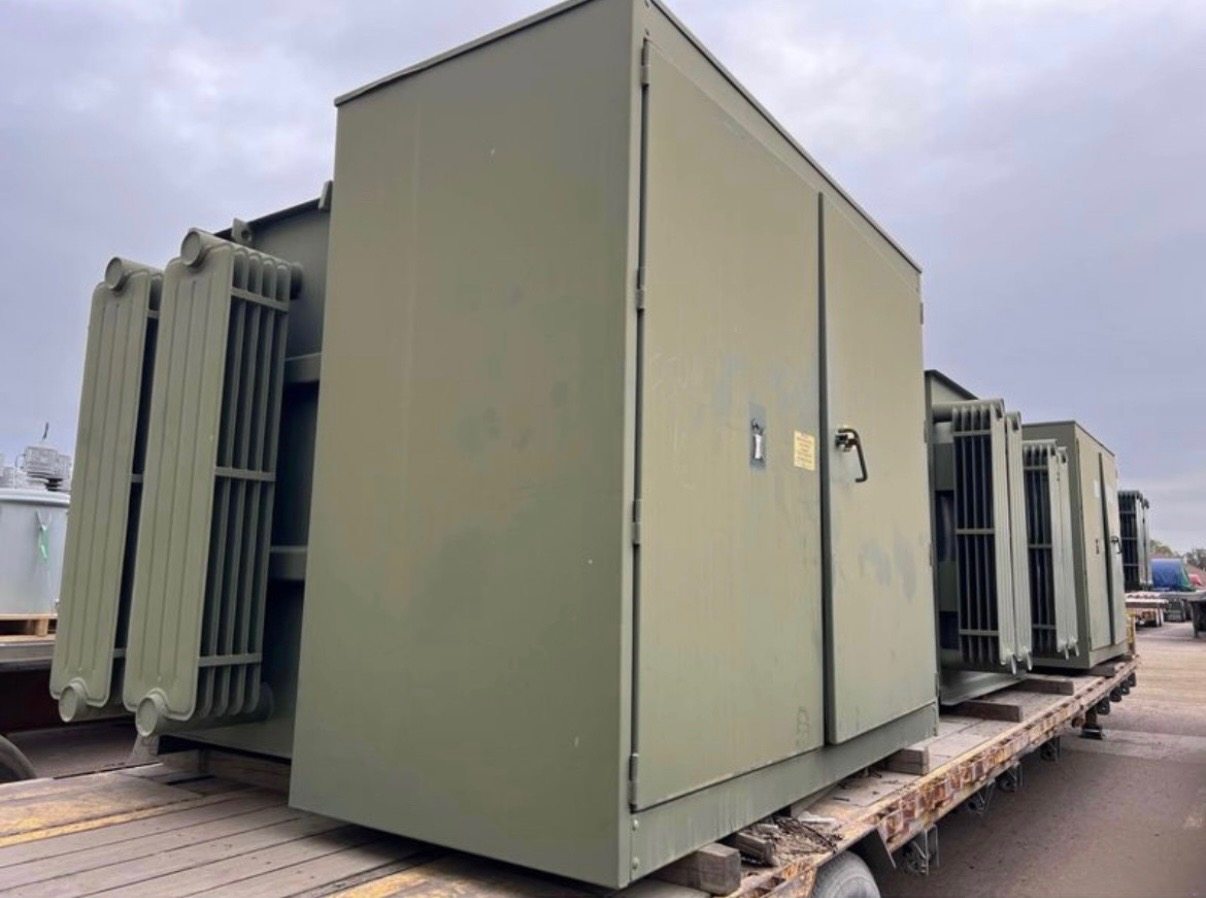
What equipment sellers should know
Collect the ratings and identifiers that make a transformer easier to evaluate.
The manufacturer, model, and serial number identify the particular unit and help match it to existing records.
Capacity may be expressed in VA, kVA, or MVA, and some plates list separate ratings for different cooling conditions.
Record all primary and secondary voltages, phase, frequency, and tap information exactly as printed.
Impedance, winding connection, cooling designations, and total weight can inform technical evaluation and movement planning.
Photograph plates from a safe accessible position and do not open electrical compartments or disturb suspect insulation to find them.
What to share with the buyer
- Manufacturer, model, and serial
- VA, kVA, or MVA rating
- Primary and secondary voltages
- Phase, frequency, and taps
- Cooling, impedance, and weight
A practical path to an offer
Send the equipment identification, your location and photos that can be taken safely. We review the information and discuss a cash offer. If a sale proceeds, we coordinate freight and payment details with the seller; no equipment testing is required.
Safety and site information
Do not drain oil, open enclosures, or approach energized equipment. Tell us about known leaks and available fluid or PCB records; qualified personnel should handle isolation, hazardous materials, and rigging.
Frequently asked questions
Which voltage should I enter when several are listed?
Send a photo of the whole plate and transcribe each winding voltage and tap range as marked.
Why are two capacity ratings shown?
They may correspond to different cooling conditions; provide both values and their associated designations rather than selecting one.
What if the plate is inaccessible?
Do not enter a guarded or potentially energized area; share authorized records and arrange access through qualified site personnel.