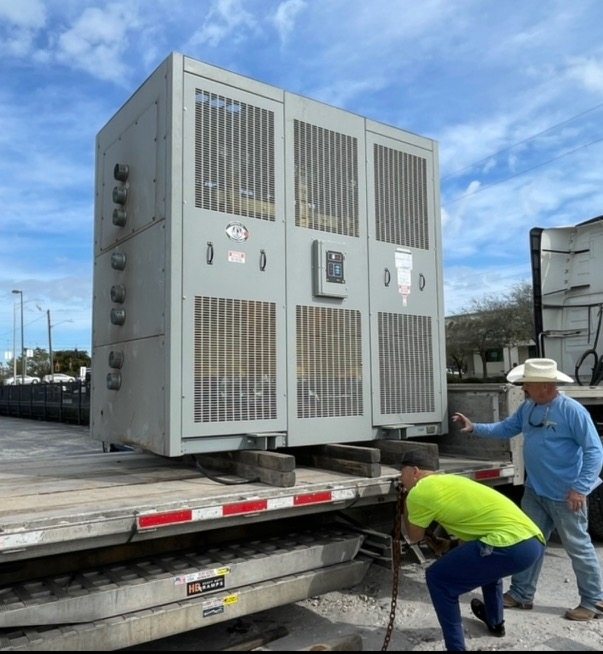
Selling Dry-Type Transformers in Centerville
Offer surplus dry-type transformers with enclosure, winding, and rating information.
For a sale in Centerville, tell us where the equipment is and describe the pickup conditions. A nameplate photograph and existing records help us review the unit without asking you to test it.
Identify the transformer by its rating and configuration
For surplus dry-type transformers, start with the nameplate: record kVA, primary and secondary voltages, phase count, and impedance when these are legible. These details distinguish units that may look similar but serve different electrical arrangements. Dry-type construction uses air or another dry insulating medium rather than a liquid-filled main tank. Provide clear nameplate photographs and describe the enclosure, including whether ventilation openings, fans, or temperature controls are present. Do not remove guards or disturb insulation to inspect the windings.
Describe condition without opening the unit
Share what can be observed from outside: dents, corrosion, damaged enclosure panels, blocked or damaged ventilation openings, and missing or visibly damaged fans or controls. Existing maintenance records can help explain the unit’s history, but do not infer internal condition from appearance alone. A quote can consider available fluid or PCB records without requiring you to test the transformer. Do not test, open, or dismantle it for a sale description; qualified personnel handle isolation, de-energization, hazardous materials, and rigging.
Plan the collection route in Centerville
For a property in Centerville, in Southern Davis County, describe usable maneuvering space rather than assuming a truck can turn around onsite. Provide an overhead site image or sketch that marks the proposed entry, the area available for turning or repositioning, and the exit. Include gates, narrow approaches, overhead obstructions, and any spots where the vehicle or transformer may need to be staged, if these apply. Add approximate transformer dimensions and note the loading access so collection planning can account for both the unit and the route.
Send a complete equipment and access description
A concise information package helps the buyer assess the transformer and plan the transaction: include nameplate and enclosure photos, the kVA and voltage ratings, phase, and any known impedance; describe enclosure type and fan or temperature-control details; and note visible corrosion or damage. Add approximate dimensions, loading access information, and any existing maintenance or fluid/PCB records. Payment is upfront, testing is not required, and freight is covered. Acceptance is not automatic; provide enough detail for the equipment and collection plan to be considered.
Centerville site and pickup context
Site context: Centerville lies in the narrow corridor between the Wasatch foothills and the Great Salt Lake area, where site access details are important.
Pickup consideration: Describe the usable maneuvering space at the property rather than assuming a truck can turn around onsite.
Helpful details to share: Provide an overhead site image or sketch showing the proposed entry, turning area, and exit.
Seller checklist
- Nameplate and enclosure photos
- kVA, voltages, and phase
- Fan or temperature-control details
- Visible corrosion or damage
- Dimensions and loading access
Work safely
Do not drain oil, open enclosures, or approach energized equipment. Tell us about known leaks and available fluid or PCB records; qualified personnel should handle isolation, hazardous materials, and rigging.
Questions about selling in Centerville
What should I include if the nameplate is partly unreadable?
Send photographs of the full nameplate and enclosure, and report any ratings you can read, such as kVA, primary and secondary voltage, and phase. Identify unreadable fields rather than guessing. Visible equipment details and existing records can add context; do not open the unit or disturb insulation to find missing information.
What should the site sketch show for collection?
Mark the proposed vehicle entry, usable turning or repositioning area, and exit, then note relevant access limits such as gates, overhead obstructions, or narrow approaches if present. Include the transformer’s approximate dimensions and loading access. The sketch should describe available maneuvering space, not assume a truck can turn around onsite.
Related local resources
Local site and seller information
Dry-Type TransformersEquipment identification and seller checklist
Substation and Power TransformersSelling in Centerville
Pad-Mounted TransformersSelling in Centerville
Pole-Mounted Distribution TransformersSelling in Centerville
Oil-Filled TransformersSelling in Centerville