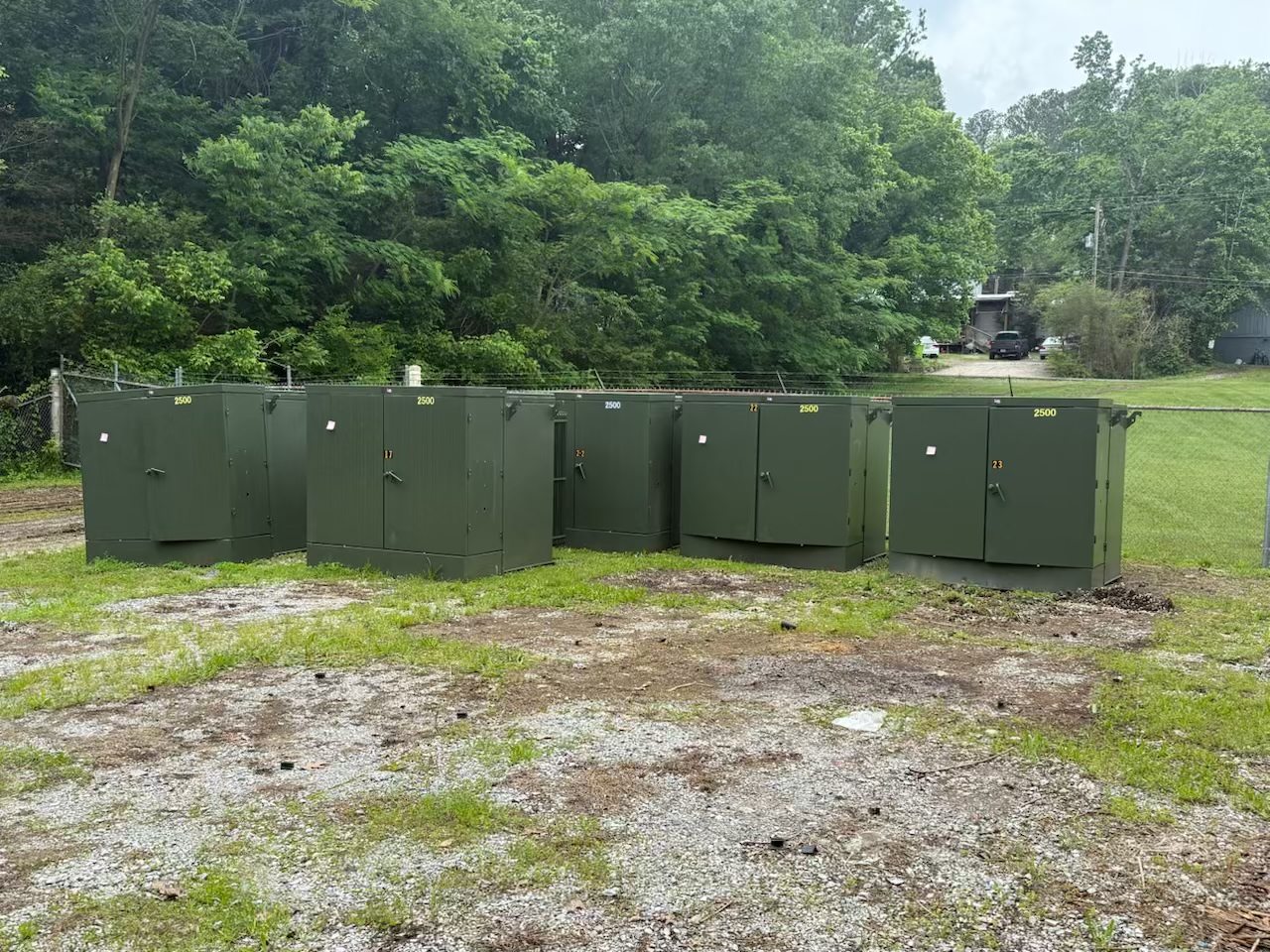
Selling Pad-Mounted Transformers in Clinton
Offer surplus pad-mounted distribution transformers with enclosure, fluid, and access information.
For a sale in Clinton, tell us where the equipment is and describe the pickup conditions. A nameplate photograph and existing records help us review the unit without asking you to test it.
Identify the transformer without opening its cabinet
Pad-mounted transformers keep their connections inside a ground-level enclosure, so describe what is visible from outside rather than exposing electrical parts. Send photos of the closed cabinet, nameplate, and accessible exterior; these can help show corrosion, impact damage, or missing doors. Include the primary and secondary voltages, kVA rating, and whether the unit is single-phase or three-phase. These details distinguish cabinets that can look similar while having different electrical ratings. Do not open an energized compartment or energize the unit to gather information.
Fluid records help frame the handling discussion
State whether the transformer’s oil or other dielectric fluid status is known, and share any existing PCB documentation and records of visible leakage. These details can affect handling and the quote; you do not need to test the fluid to request a quote. Do not drain the transformer or collect a sample. Qualified personnel handle hazardous materials and any required isolation and de-energization. If records are incomplete, say what is available and what is unknown so the unit can be discussed on the basis of the information you actually have.
Plan pickup around the service-lot approach
For a Clinton pickup, describe the pad and the route a truck would use to reach the transformer. Because collection may involve a compact commercial service lot, confirm whether parked vehicles or waste containers need to be relocated before a flatbed can reach the unit. Share a site photo showing the service-lot entrance and any movable obstructions. Include any known access limits rather than assuming the truck can reach the pad; this gives the pickup discussion a practical basis without requiring you to move equipment or handle the transformer yourself.
Keep the sale information together
A concise equipment description can combine the closed-cabinet and nameplate photos, voltage and kVA details, phase, feed arrangement, fluid status, PCB records, and any visible leakage or enclosure damage. Add the pad and truck-access details so the equipment information and collection planning are considered together. Do not dismantle the cabinet or attempt electrical checks to fill gaps. A qualified electrical crew handles isolation and verifies the unit, while qualified personnel manage rigging. Payment is upfront, no testing is required, and freight is covered.
Clinton site and pickup context
Site context: Clinton is near the Davis-Weber county line, and equipment pickup may involve a compact commercial service lot.
Pickup consideration: Confirm whether parked vehicles or waste containers need to be relocated before a flatbed can reach the unit.
Helpful details to share: Share a site photo showing the service-lot entrance and any movable obstructions.
Seller checklist
- Closed cabinet and nameplate photos
- Primary and secondary voltages
- Single-phase or three-phase rating
- Available fluid and PCB records
- Pad and truck access
Work safely
Do not drain oil, open enclosures, or approach energized equipment. Tell us about known leaks and available fluid or PCB records; qualified personnel should handle isolation, hazardous materials, and rigging.
Questions about selling in Clinton
What should I photograph if I cannot open the transformer cabinet?
Photograph the closed cabinet, nameplate, and accessible exterior. These views can show the model information and visible enclosure condition, including corrosion, impact damage, or missing doors, without exposing electrical parts. Do not open an energized compartment. If a rating detail is not legible, report that rather than attempting an electrical check.
Do I need to test or drain the dielectric fluid before asking for a quote?
No. Share the fluid status and any existing PCB records, and note visible leakage or uncertainty. Do not test, sample, or drain the fluid. Those details can inform the quote and handling discussion without requiring you to perform hazardous work; qualified personnel handle hazardous materials and the appropriate equipment isolation.
Related local resources
Local site and seller information
Pad-Mounted TransformersEquipment identification and seller checklist
Substation and Power TransformersSelling in Clinton
Pole-Mounted Distribution TransformersSelling in Clinton
Dry-Type TransformersSelling in Clinton
Oil-Filled TransformersSelling in Clinton