Selling Substation and Power Transformers in Roy
Sell surplus substation and power transformers with their ratings, condition, and removal constraints clearly documented.
For a sale in Roy, tell us where the equipment is and describe the pickup conditions. A nameplate photograph and existing records help us review the unit without asking you to test it.
Identify the transformer’s capacity and configuration
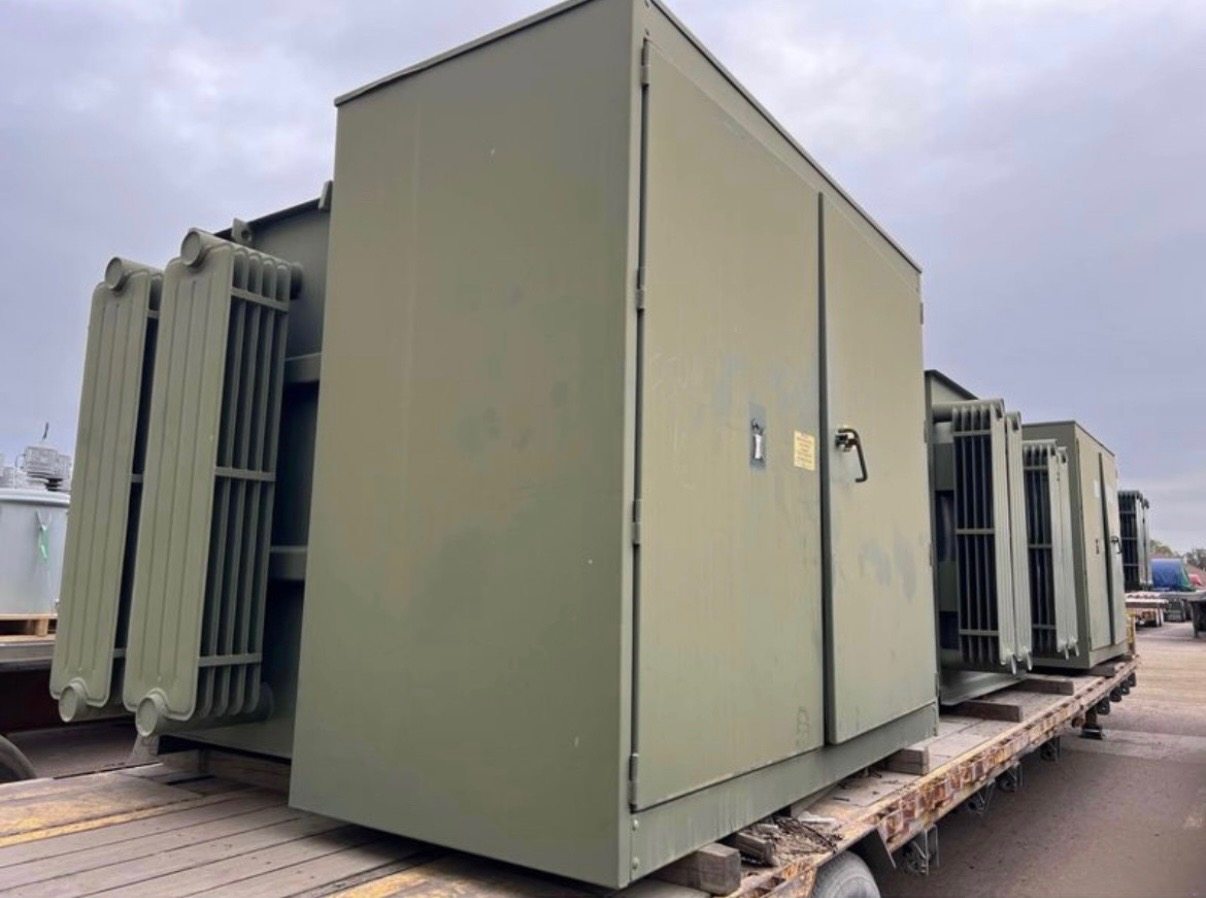
For a substation or power transformer, start with clear nameplate photos and the serial number. Record the MVA or kVA rating, primary and secondary voltages, phase count, and frequency; these identify the unit’s electrical capacity and intended configuration. Include the cooling designation and any higher fan-cooled rating, since two transformers with the same base rating may differ in how they are cooled and rated. Share the information as shown rather than trying to interpret or verify it yourself.
Describe completeness and known condition
Note whether the transformer’s bushings, radiators, load tap changer, and control cabinet are present, and describe visible damage or leak history without opening compartments or disturbing the unit. Provide existing oil and PCB records if available, along with the total weight and any known material-status information. Unknown oil or PCB status can affect handling and the quote, but you do not need to test the oil. A quote can consider available fluid and PCB records without requiring the seller to perform testing.
Plan the route out of the building
If the unit is in a small manufacturing or maintenance building in Roy, access details may be as important as the nameplate. Check the overhead-door height and trace the cleared route to the loading area; identify whether the transformer would need to be rolled, lifted, or loaded at floor level. If safely accessible, share the exterior nameplate weight and a picture of the overhead door taken from inside the cleared route. Note tight turns, obstructions, and crane access if known, without moving the transformer to investigate.
Keep removal and transaction planning orderly
Send the equipment details, records, condition notes, and access information together so the buyer can consider the transformer as a complete unit and understand removal constraints before arranging pickup. Do not energize the equipment, drain oil, open locked compartments, or disturb suspect materials. Qualified personnel handle isolation, de-energization, hazardous materials, and rigging. The stated transaction terms are payment upfront, no testing, and freight covered; these do not mean every transformer is unconditionally accepted, so provide accurate details for a quote.
Roy site and pickup context
Site context: A Roy seller may be clearing equipment from a small manufacturing or maintenance building in the northern Wasatch Front.
Pickup consideration: Check the overhead-door height and identify whether the transformer must be rolled, lifted, or loaded at floor level.
Helpful details to share: Share the exterior nameplate weight and a picture of the overhead door from inside the cleared route, if safely accessible.
Seller checklist
- Nameplate and serial number photos
- MVA, voltage, and cooling ratings
- Oil and PCB records if available
- Bushing and radiator condition
- Weight and crane access
Work safely
Do not drain oil, open enclosures, or approach energized equipment. Tell us about known leaks and available fluid or PCB records; qualified personnel should handle isolation, hazardous materials, and rigging.
Questions about selling in Roy
What should I send if the nameplate is difficult to read?
Send the clearest safely obtainable photos of the nameplate and serial number, plus any existing equipment records showing ratings or cooling details. Do not access locked compartments, remove covers, or energize the transformer to improve documentation. Mark information you cannot confirm as unknown rather than guessing.
Do I need to test or drain the oil before requesting a quote?
No. Share existing oil and PCB records, if available, and describe any known leak history. A quote can consider those records without requiring you to test the oil. Do not drain fluids or collect samples; qualified personnel handle isolation, de-energization, hazardous materials, and rigging.