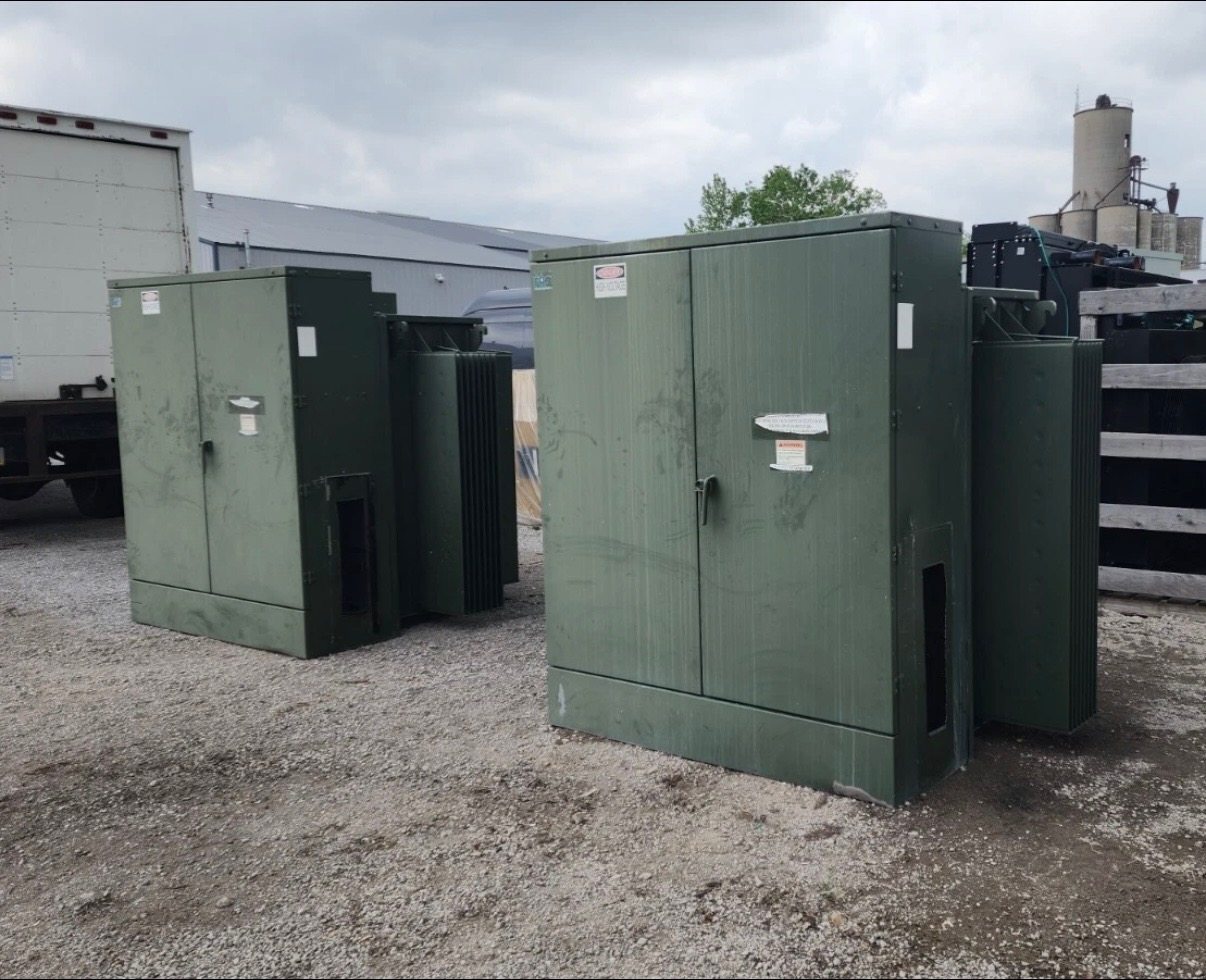
Selling Dry-Type Transformers in Smithfield
Offer surplus dry-type transformers with enclosure, winding, and rating information.
For a sale in Smithfield, tell us where the equipment is and describe the pickup conditions. A nameplate photograph and existing records help us review the unit without asking you to test it.
Describe the transformer’s rating and construction
For a dry-type transformer, begin with the nameplate rather than an estimate based on its size. Record the kVA rating, primary and secondary voltages, phase count, and impedance if they are legible, and share a clear nameplate photo. These details distinguish units that may look similar but serve different electrical duties. Dry-type designs use air or another dry insulating medium instead of a liquid-filled main tank; note the enclosure type and whether ventilation openings are present, without removing covers or guards.
Record what is present and what is visible
Describe the equipment as it stands: enclosure condition, visible corrosion or impact damage, and whether fans or temperature controls appear to be included. Mention missing or damaged external components only if you can see them safely. Existing maintenance records can help explain the unit’s service history, but do not disturb insulation or open protected areas to investigate the windings. A qualified professional should isolate and verify the transformer before it is disconnected or moved; qualified personnel also handle de-energization and any required rigging.
Plan the collection approach in northern Cache Valley
Smithfield is in northern Cache Valley, and a transformer may be stored at a shop or another rural-edge property. When describing access, include the dimensions and loading access, and identify any unpaved approach. Ask whether that surface remains suitable for the collection vehicle during wet or freezing weather, rather than assuming its condition from a dry-day view. Share a photo of the transformer’s external lifting points and the surface beneath the unit. Do not attempt to attach lifting gear or move the transformer yourself.
Prepare a useful photo and records package
Send exterior photos that show the whole enclosure, nameplate, ventilation openings, fans or temperature controls, visible damage, and the surrounding loading area. Include any existing maintenance records and available fluid or PCB records if they apply to the equipment; a quote can consider those records without requiring you to test the transformer. Do not collect samples or open the unit to determine its contents. Payment is upfront, testing is not required, and freight is covered; acceptance is not unconditional and depends on the equipment information and collection details.
Smithfield site and pickup context
Site context: Smithfield is in northern Cache Valley, where a transformer might be stored at a shop or other rural-edge property.
Pickup consideration: Identify any unpaved approach and ask whether it remains suitable for the collection vehicle during wet or freezing weather.
Helpful details to share: Share a photo of the transformer's external lifting points and the surface beneath the unit.
Seller checklist
- Nameplate and enclosure photos
- kVA, voltages, and phase
- Fan or temperature-control details
- Visible corrosion or damage
- Dimensions and loading access
Work safely
Do not drain oil, open enclosures, or approach energized equipment. Tell us about known leaks and available fluid or PCB records; qualified personnel should handle isolation, hazardous materials, and rigging.
Questions about selling in Smithfield
What should I provide if the nameplate is unreadable?
Share a photo of the nameplate as it appears, plus the enclosure, overall dimensions, and any existing records that identify the unit. Report any legible kVA, voltage, phase, or impedance markings, but do not remove panels or guards to find another label. The available information can still support an initial review.
Do I need to prepare the transformer or arrange lifting?
No. Do not test, disconnect, or move the transformer yourself. A qualified professional should isolate and verify it before disconnection or movement, and qualified personnel handle de-energization and rigging. You can help plan collection by describing access, noting any unpaved approach and its wet- or freezing-weather suitability, and sharing photos of external lifting points and the supporting surface.
Related local resources
Local site and seller information
Dry-Type TransformersEquipment identification and seller checklist
Substation and Power TransformersSelling in Smithfield
Pad-Mounted TransformersSelling in Smithfield
Pole-Mounted Distribution TransformersSelling in Smithfield
Oil-Filled TransformersSelling in Smithfield