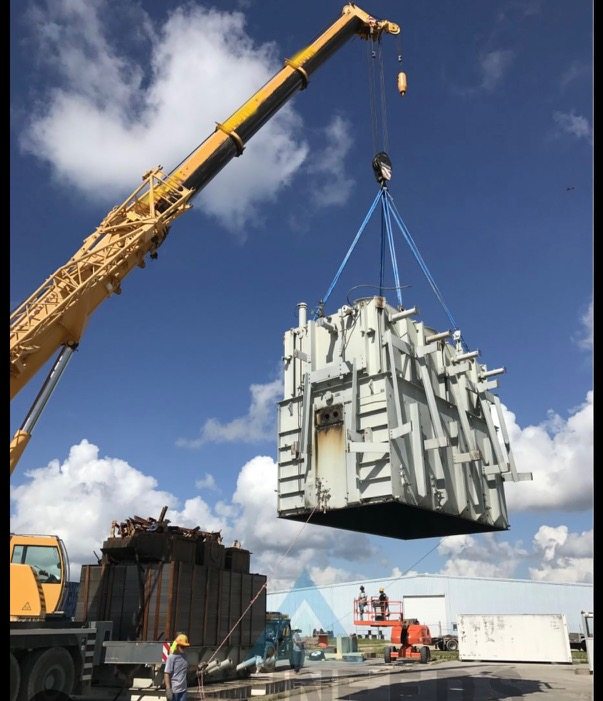
Selling Substation and Power Transformers in Hurricane
Sell surplus substation and power transformers with their ratings, condition, and removal constraints clearly documented.
For a sale in Hurricane, tell us where the equipment is and describe the pickup conditions. A nameplate photograph and existing records help us review the unit without asking you to test it.
Identify the transformer and its usable configuration
For a substation or power transformer, start with clear nameplate and serial-number photos, then report the MVA or kVA rating, primary and secondary voltages, phase count, and frequency. These details establish the unit’s electrical capacity and help distinguish it from equipment that looks similar. Include the cooling designation and any higher fan-cooled rating; a transformer’s base capacity alone may not describe its full rated configuration. Note whether load tap changers, bushings, radiators, and control cabinets are present or visibly damaged, since completeness affects how the unit is described and what must be accommodated during removal.
Describe the proposed pickup point in Hurricane
Hurricane is east of St. George in southwest Utah, where some equipment sites may have open, unpaved yards. For the proposed lift point, describe the surface and any wind exposure so the loading method can be assessed; do not assume that an open yard is level or suitable for a particular lift. Share a photo showing the transformer and its immediate ground conditions from a safe position. Also describe access restrictions and available crane access, including any constraints that could affect positioning or removal. Qualified personnel handle rigging and determine the appropriate lifting approach.
Document oil history, condition, and removal constraints
Provide existing oil and PCB records, any known visible leak history, the total weight, and restrictions on access or removal. Records help describe the transformer and allow material status to be considered in the quote; the seller does not need to test it. Unknown material status can affect handling and the quote, and PCB-containing equipment is not automatically accepted. Do not drain oil, collect samples, open locked compartments, or disturb suspect materials. Qualified personnel handle hazardous materials and any required work on the equipment.
Plan a safe, orderly handoff
Before arranging removal, gather the nameplate and serial-number photos, cooling and electrical ratings, available oil and PCB records, and observations about bushings and radiators. Make clear which details are known, which are based only on visible condition, and which are unavailable rather than guessing. Identify the transformer’s weight and the practical access restrictions, then provide the safe-position photo of the unit and its ground conditions. Only qualified professionals should isolate and verify the equipment before work; do not energize it or attempt to prepare it for removal. Payment is upfront, no testing is required, and freight is covered.
Hurricane site and pickup context
Site context: Hurricane lies east of St. George in southwest Utah, where some equipment sites may have open, unpaved yards.
Pickup consideration: Describe the surface and any wind exposure at the proposed lift point so the loading method can be assessed.
Helpful details to share: Share a photo of the transformer and its immediate ground conditions from a safe position.
Seller checklist
- Nameplate and serial number photos
- MVA, voltage, and cooling ratings
- Oil and PCB records if available
- Bushing and radiator condition
- Weight and crane access
Work safely
Do not drain oil, open enclosures, or approach energized equipment. Tell us about known leaks and available fluid or PCB records; qualified personnel should handle isolation, hazardous materials, and rigging.
Questions about selling in Hurricane
What information is most useful if the nameplate is difficult to read?
Share the clearest safe-position photos available, including the nameplate and serial number, and report any ratings you can read with confidence. Do not open compartments or approach energized equipment to improve a photo. Mark unreadable details as unknown; available oil and PCB records, visible condition, total weight, and access constraints can still help describe the unit.
What should I show about an unpaved pickup area?
Describe the surface at the proposed lift point and any wind exposure, and send a photo of the transformer with the immediate ground conditions from a safe position. Include relevant access restrictions and crane access. These details help assess the loading method, but qualified personnel must determine and perform the rigging and lift; do not move or prepare the transformer yourself.
Related local resources
Local site and seller information
Substation and Power TransformersEquipment identification and seller checklist
Pad-Mounted TransformersSelling in Hurricane
Pole-Mounted Distribution TransformersSelling in Hurricane
Dry-Type TransformersSelling in Hurricane
Oil-Filled TransformersSelling in Hurricane