Selling Pad-Mounted Transformers in Sandy
Offer surplus pad-mounted distribution transformers with enclosure, fluid, and access information.
For a sale in Sandy, tell us where the equipment is and describe the pickup conditions. A nameplate photograph and existing records help us review the unit without asking you to test it.
Identify the transformer from its ratings
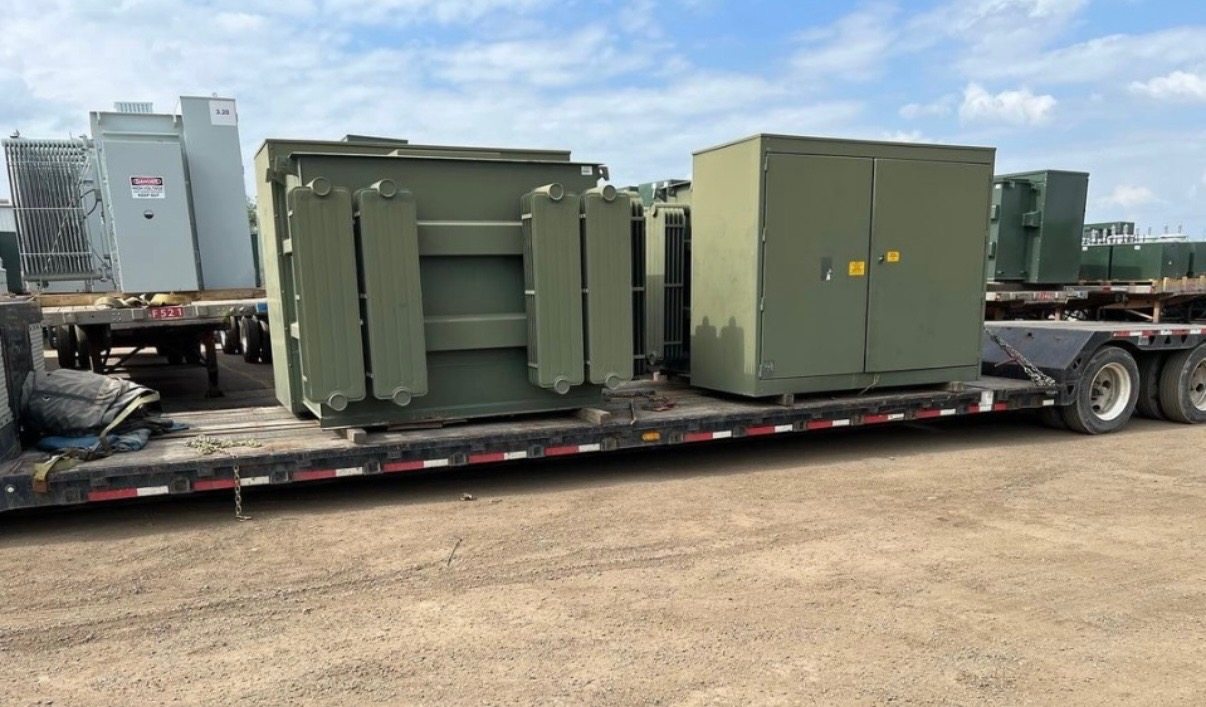
When describing a surplus pad-mounted transformer, send a clear nameplate image that shows both primary and secondary voltage ratings. Include the kVA rating and whether the unit is single-phase or three-phase; these details help distinguish cabinets that look similar from the outside. If the nameplate lists the feed arrangement, include that information too. Photograph the closed cabinet and accessible exterior rather than opening the enclosure or exposing electrical parts.
Share fluid records without testing the unit
Note whether dielectric fluid is present, and provide any existing fluid or PCB documentation you have. Mention visible leakage, corrosion, impact damage, or missing doors, using exterior photographs where practical. These details help the buyer consider handling and prepare a quote; you do not need to test the transformer or collect samples. Do not drain fluid or open an energized compartment. Qualified personnel handle isolation, de-energization, hazardous materials, and rigging.
Plan the collection approach
For a Sandy pickup, describe the pad location and the route from the driveway to the service door. Sandy lies along the eastern Salt Lake Valley, and an equipment room may be reached from a sloping property; note the driveway slope and whether a loaded truck can approach the service door without grounding out. Share any access limits or obstacles you know about so the collection approach can be considered before arrangements are made.
Assemble a useful equipment description
A concise handoff can combine the closed-cabinet and nameplate photos with the voltage ratings, kVA, phase, and feed arrangement. Add the fluid status, any available PCB records, visible exterior condition, and a brief description of pad and truck access. Keep observations to what you can see or document safely; leave electrical verification and any work involving fluid or rigging to qualified personnel. This information gives the buyer a practical basis to assess the surplus unit and discuss the transaction.
Sandy site and pickup context
Site context: Sandy lies along the eastern Salt Lake Valley, where an equipment room may be accessed from a sloping property.
Pickup consideration: Note the driveway slope and whether a loaded truck can approach the service door without grounding out.
Helpful details to share: Send a nameplate image showing both primary and secondary voltage ratings.
Seller checklist
- Closed cabinet and nameplate photos
- Primary and secondary voltages
- Single-phase or three-phase rating
- Available fluid and PCB records
- Pad and truck access
Work safely
Do not drain oil, open enclosures, or approach energized equipment. Tell us about known leaks and available fluid or PCB records; qualified personnel should handle isolation, hazardous materials, and rigging.
Questions about selling in Sandy
Do I need to test the transformer or obtain PCB testing before requesting a quote?
No testing is required to request a quote. Send any existing fluid and PCB records and describe the unit’s known condition, including visible leakage if present. Do not open an energized compartment, collect samples, or drain fluid; qualified personnel handle isolation, de-energization, and hazardous materials.
What should I report about a sloped driveway or equipment-room approach?
Describe the driveway slope, the route to the pad or service door, and any known access constraints. In particular, note whether a loaded truck can approach the service door without grounding out. Do not move or rig the transformer yourself; qualified personnel handle rigging.